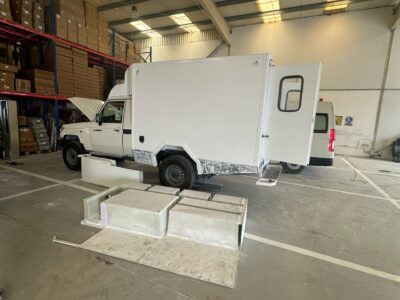
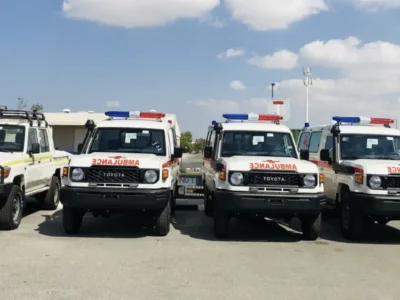
The Toyota Ambulance Manufacturer

When an emergency call comes in, every second counts. The vehicle that arrives on the scene must be more than just a mode of transport—it is a mobile emergency room, a sanctuary of stability, and a testament to engineering reliability. As a dedicated Toyota ambulance manufacturer, we understand that the intersection of automotive excellence and medical necessity creates a responsibility like no other. Our mission is to transform robust Toyota platforms into sophisticated life-saving tools that medical professionals trust globally.
This article explores the world of professional emergency vehicle production, detailing why the symbiosis between a world-class chassis and expert conversion craftsmanship results in the most reliable ambulances on the road today.
The Philosophy Behind Our Toyota Ambulance Manufacturing
Building an ambulance is not merely about installing equipment inside a van. It requires a holistic approach that respects the integrity of the original vehicle while transforming it into a critical care environment. As a premier Toyota ambulance manufacturer, our philosophy is rooted in three core principles: reliability, functionality, and safety.
A Legacy of Trust
Toyota’s reputation for durability and mechanical simplicity is unparalleled. By starting with a Toyota chassis—whether it’s the ubiquitous Hiace, the unstoppable Land Cruiser, or the rugged Hilux—we begin with a foundation known for longevity and low total cost of ownership . This reliability is the bedrock upon which we build our advanced medical modules. Medical organizations choose our Toyota ambulance conversions because they know the vehicle will start every time, navigate challenging conditions, and remain operational for years, even in the most demanding environments .
The Conversion Business Unit Approach
True expertise in this field comes from specialization. Our operations function similarly to Toyota’s own Conversion Business Unit model, where base vehicles are meticulously transformed by craftsmen who specialize in emergency vehicle production . This second-stage manufacturing process ensures that every weld, every wire, and every cabinet is installed with a single focus: supporting emergency medical services (EMS) providers in their life-saving work .
Types of Ambulances We Produce and Customization Options
No two emergencies are exactly alike, and no single ambulance design fits every need. A hallmark of a skilled certified ambulance manufacturer is the ability to offer a diverse range of vehicle types and deep customization options. We cater to various operational theaters, from dense urban centers to remote wilderness.
Van-Type Ambulances on Toyota Hiace
The Toyota Hiace is arguably the most popular platform for ambulance conversion worldwide . Its compact exterior dimensions belie a surprisingly spacious interior, making it ideal for navigating city streets while providing ample room for patient care.
BLS, ALS, and ICU Configurations
The Hiace platform is incredibly versatile. We produce:
- Basic Life Support (BLS) vehicles: Designed for patient transport and non-critical care, featuring standard stretcher systems and basic medical storage .
- Advanced Life Support (ALS) units: Equipped with cardiac monitors, defibrillators, and advanced airway management tools.
- Mobile Intensive Care Unit (ICU) vehicles: Featuring ventilator support, multiple IV pumps, and a layout that mimics a hospital intensive care unit .
The high-roof variant of the Hiace is particularly sought after, as it allows medical staff to stand upright and move comfortably around the patient, reducing fatigue and improving care quality during long transfers .
4×4 and Off-Road Ambulances for Remote Access
For organizations operating in challenging terrains—mountainous regions, deserts, or disaster zones—a standard van is insufficient. This is where our specialized 4×4 ambulances excel.
Toyota Land Cruiser 70 Series
The Land Cruiser is legendary for its go-anywhere capability. Our hardtop ambulance conversions on the Land Cruiser 70 or 78 series provide a compact, highly maneuverable, and virtually indestructible emergency vehicle . With high ground clearance, solid axles, and a proven diesel powertrain, these vehicles bring medical aid to the most inaccessible places on earth .
Toyota Hilux Rapid Responders
The Hilux, known for its incredible durability, serves as an excellent platform for rapid response vehicles or light-duty patient transport in industrial or rural settings . These units are often configured for quick extraction and stabilization before a larger transport vehicle arrives.
Customization: Tailoring the Interior to Medical Protocols
The true value of working with a specialized manufacturer lies in the ability to customize. We don’t believe in “one-size-fits-all” interiors. Instead, we work with medical directors and fleet managers to design layouts that match their specific clinical workflows .
Modular Storage and Cabinetry
Our custom cabinetry is designed to secure essential equipment while keeping it within arm’s reach of the seated and belted attendant. This focus on ergonomics ensures that paramedics can provide care safely while the vehicle is in motion .
Electrical and Pneumatic Systems
Modern ambulances are complex machines. We integrate powerful electrical systems with dedicated circuits for medical devices, inverters for clean AC power, and a full suite of oxygen and suction outlets. The control systems are designed with simplicity in mind, allowing crew members to manage the vehicle’s environment without distraction .
Uncompromising Safety Standards and Quality Control
In emergency vehicle production, safety is not just a feature; it is the entire point. As a responsible Toyota ambulance manufacturer, we adhere to the strictest international standards and conduct rigorous quality control at every stage of production.
Adherence to Global Standards
Our manufacturing processes are designed to meet or exceed the requirements of various international certifications, ensuring our vehicles are accepted by fleets worldwide.
EN 1789 Compliance
For markets requiring European standards, we build our ambulances to comply with EN 1789 . This standard specifies requirements for the construction of ambulances, including roadworthiness, electrical systems, and the stability of stretchers and medical devices during crashes and sudden maneuvers. It ensures that the vehicle provides a safe environment for both the patient and the medical staff .
ISO 9001:2015 Certified Manufacturing
Quality management is at the heart of our operations. Our facilities are ISO 9001:2015 certified, guaranteeing that our production processes are consistent, traceable, and focused on continuous improvement . This certification provides our clients with confidence that every vehicle leaving our factory meets the same high standards of build quality.
Structural Integrity and Patient Compartment Safety
Converting a standard vehicle into an ambulance involves reinforcing the structure to handle the additional weight of medical equipment and to protect occupants in the event of a collision.
Advanced Material Construction
We utilize high-strength materials and corrosion-resistant metals in the construction of our patient modules . The integration of the medical body with the Toyota chassis is engineered to maintain the vehicle’s original torsional rigidity while providing a safe, secure shell for the patient compartment .
Occupant Safety Systems
Safety extends to the ergonomic design of the interior. Features such as anti-microbial surfaces on cabinetry help with infection control . We prioritize seating that allows medics to remain belted while attending to the patient, and all equipment is securely fastened to prevent it from becoming a projectile in an accident . Advanced driver assistance systems, such as Toyota Safety Sense, are now standard on many of our base vehicles, adding layers of active safety with features like pre-collision warning and pedestrian detection .
The Benefits for Medical Organizations
Investing in a professionally converted Toyota ambulance offers numerous advantages for hospitals, government agencies, and non-governmental organizations (NGOs).
Unbeatable Reliability and Low Cost of Ownership
Toyota’s global parts network means that no matter where the vehicle is deployed, spare parts are accessible. This logistical simplicity drastically reduces downtime, which is critical for emergency services . The mechanical simplicity of Toyota engines and drivetrains also means that local mechanics are often already familiar with the platforms, simplifying maintenance and repair .
Operational Flexibility
Whether an organization needs a city ambulance for rapid response, a patient transport vehicle for inter-facility transfers, or a rugged 4×4 for a humanitarian mission in a remote area, a Toyota-based solution exists . This flexibility allows fleet managers to standardize on a single brand, simplifying training and parts inventory, while deploying vehicles tailored to specific missions.
Enhanced Resale Value
Toyota vehicles are known for holding their value exceptionally well. A well-maintained, professionally converted ambulance retains a significant portion of its value over time, providing a better return on investment for the taxpayer or organization funding the fleet .
Why Choosing a Certified and Experienced Manufacturer Matters
The marketplace is filled with entities offering “ambulance conversions,” but the difference between a simple vehicle assembler and a true certified ambulance manufacturer is profound. This distinction has a direct impact on safety, longevity, and clinical functionality.
Engineering Integration vs. Simple Assembly
An experienced manufacturer approaches the project as engineers, not just fitters. We understand the weight distribution limits of the chassis, the electrical load capacity of the alternator, and the aerodynamics of the roof-mounted light bar . This depth of knowledge ensures that the final product is greater than the sum of its parts.
- Electrical Systems: Properly integrated electrical systems prevent battery drain and ensure that life-support equipment has fail-safe power.
- Weight Distribution: Correct weight balance ensures predictable handling, preventing rollovers and reducing tire wear .
- Documentation: Certified manufacturers provide full documentation, including Conformity of Production (COP) files, which are often required for government tenders and registration in strict regulatory environments .
The Ford Pro Upfitter Parallel
Just as leading American manufacturers like Braun seek and achieve “Ford Pro Upfitter Qualified” status to validate their expertise, our specialization in Toyota platforms serves the same purpose . It signals to the buyer that we have been vetted—not just by our own quality department, but by the market itself—as a builder capable of producing safe, reliable, and compliant emergency vehicles . This status is your guarantee of quality.
Conclusion Toyota Ambulance Manufacturer
When lives are on the line, the vehicle must respond without hesitation. As a dedicated Toyota ambulance manufacturer, we take the world’s most trusted automotive platforms and elevate them through precision engineering, uncompromising safety standards, and deep customization. From the bustling city streets served by the Hiace to the remote mountain trails conquered by the Land Cruiser, our vehicles are a testament to the power of expert craftsmanship.
Choosing the right manufacturer is as critical as choosing the right chassis. It is a decision that impacts the safety of your medics, the comfort of your patients, and the efficiency of your fleet for years to come. Trust the expertise that comes from years of specialized emergency vehicle production.
FAQs Toyota Ambulance Manufacturer
- Q: What Toyota models are most commonly used for ambulance conversions?
A: The most common platforms are the Toyota Hiace (for van-type urban and intercity ambulances), the Toyota Land Cruiser 70 Series (for off-road and remote area operations), and the Toyota Hilux (for rapid response and light-duty roles) . - Q: Can a Toyota ambulance be customized for different levels of medical care?
A: Yes. As a specialized manufacturer, we offer full customization for Basic Life Support (BLS), Advanced Life Support (ALS), and Mobile Intensive Care Unit (ICU) configurations. Interiors are tailored to match local medical protocols and equipment . - Q: Are Toyota ambulances compliant with international safety standards?
A: Absolutely. We manufacture vehicles to meet various international standards, including the European EN 1789 standard for ambulances. Our production facilities are ISO 9001:2015 certified, ensuring consistent quality and safety . - Q: Is it possible to get a 4×4 Toyota ambulance for use in rural or rough terrain?
A: Yes. We produce 4×4 ambulance variants, most notably on the Land Cruiser 70 Series chassis, which is designed specifically for extreme off-road conditions. The Toyota Hiace can also be equipped with all-wheel-drive options for improved traction on mixed terrain . - Q: How does second-stage manufacturing differ from just outfitting a van?
A: Second-stage manufacturing is an engineering-led process. It involves structurally integrating the medical module with the chassis, professionally installing electrical and pneumatic systems, and ensuring the vehicle complies with safety standards like EN 1789. This is distinct from simply placing equipment inside a standard van, as it ensures the vehicle is safe, durable, and reliable under emergency conditions .